
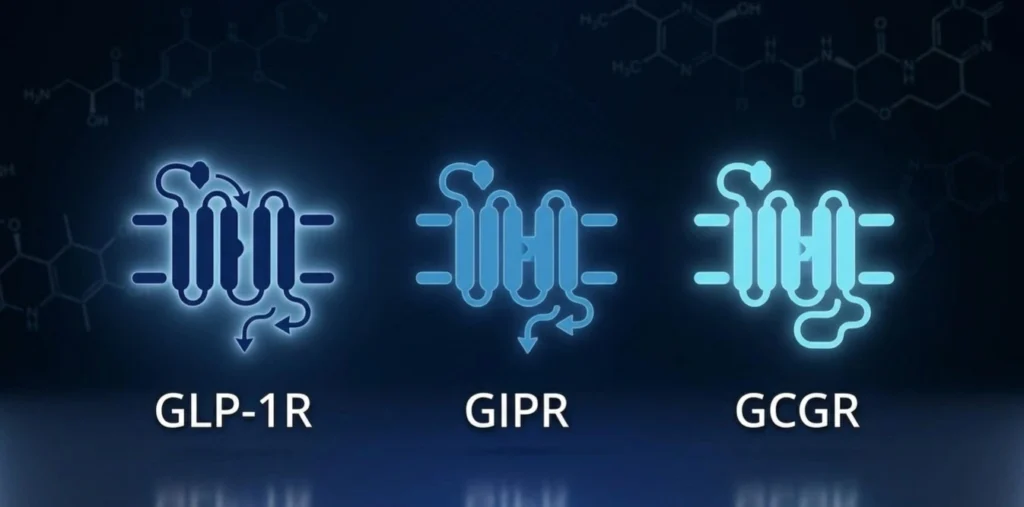
Retatrutide (developmental designation LY3437943) is a synthetic peptide analog developed by Eli Lilly. It belongs to a class of compounds designed to simultaneously engage three distinct metabolic receptors: the glucagon-like peptide-1 receptor (GLP-1R), the glucose-dependent insulinotropic polypeptide receptor (GIPR), and the glucagon receptor (GCGR). This tri-agonist profile sets it apart from earlier single and dual-agonist compounds and is the central reason for the scientific community’s heightened interest in its investigational potential.
Its molecular structure is based on a modified glucagon backbone, with targeted amino acid substitutions engineered to optimize receptor binding affinity and extend plasma half-life. This structural design supports a once-weekly administration schedule in clinical trial settings, a characteristic it shares with other long-acting peptide analogs currently under investigation.
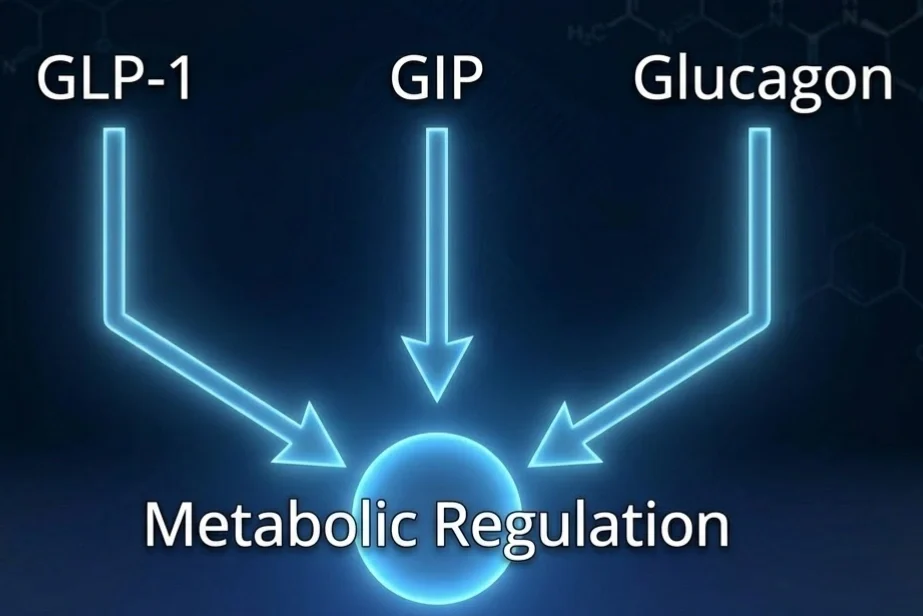
The compound’s tri-agonist approach is rooted in the hypothesis that activating all three receptor systems together produces additive, and potentially synergistic, effects on metabolic regulation that neither single nor dual agonists can fully replicate. This makes retatrutide particularly relevant to research programs focused on complex metabolic pathways rather than isolated receptor targets.
Mechanism of Action: How the Triple-Agonist Profile Works
Retatrutide’s mechanism of action is defined by its concurrent agonism at three distinct receptor pathways, each contributing a different dimension to its overall metabolic profile. Researchers studying this compound benefit from understanding how each pathway operates independently and how the three interact within the same signaling environment.
GLP-1 Receptor Activation
GLP-1 receptor activation is associated with enhanced glucose-dependent insulin secretion, suppression of glucagon release under hyperglycemic conditions, and slowing of gastric emptying. These effects are well-characterized across the broader GLP-1 agonist class and form the pharmacological foundation upon which the retatrutide construct is built. The GLP-1 component also plays a critical role in moderating the hyperglycemic risk that would otherwise be associated with isolated glucagon stimulation.
GIP Receptor Agonism
GIP receptor agonism adds complementary insulinotropic activity and is believed to play a meaningful role in adipose tissue signaling. Research into dual GLP-1/GIP agonism has already demonstrated incremental efficacy over single-pathway agents, tirzepatide’s clinical profile being the clearest example. In the context of retatrutide, GIPR engagement is understood to contribute to the compound’s effects on lipid metabolism and fat distribution, areas of active investigation in preclinical and clinical models.
Glucagon Receptor Agonism
Glucagon receptor agonism is the element that most clearly distinguishes retatrutide from dual agonists currently under study. GCGR activation is thought to drive increased hepatic glucose output and thermogenic activity, effects that researchers have proposed could meaningfully enhance energy expenditure at the systemic level. The combination of GLP-1 and glucagon co-activation is a particularly active area of pharmacological inquiry, with preclinical data suggesting that the two pathways may work together to produce metabolic effects greater than either can achieve independently.
Current Research Findings
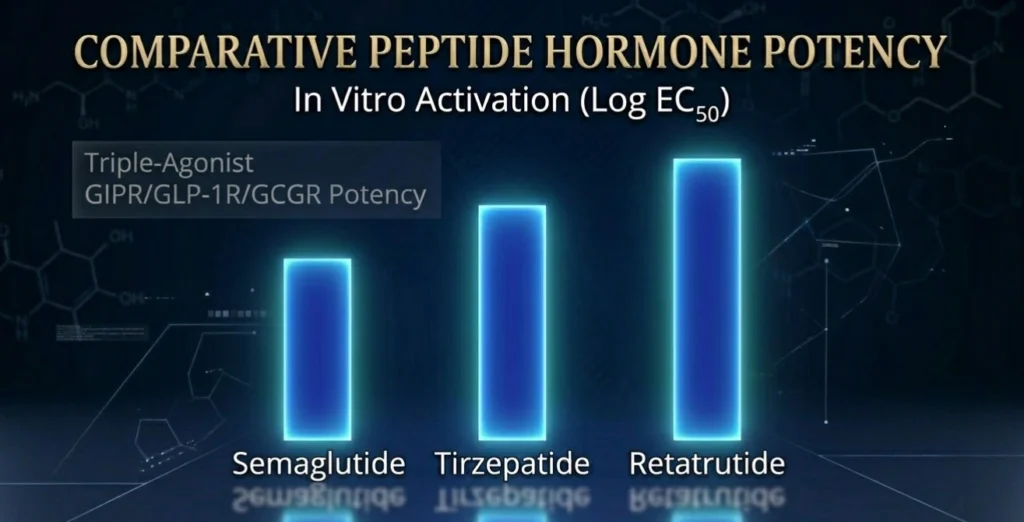
Retatrutide has progressed through Phase 1 and Phase 2 clinical evaluation, with findings published in peer-reviewed literature including The New England Journal of Medicine. The Phase 2 data generated significant attention in the research community, both for the magnitude of the outcomes observed and for the compound’s tolerability profile relative to the degree of metabolic activity it demonstrated.
Key data points from Phase 2 trials examining adult participants with obesity include:
- Substantial reductions in body weight over a 48-week period, with outcomes in highest-dose cohorts exceeding those previously observed with dual-agonist compounds
- Dose-dependent responses across all trial arms with tolerability profiles consistent with the broader GLP-1 agonist class
- Favorable directional changes across secondary metabolic markers including fasting insulin levels, triglycerides, and waist circumference
- Preclinical rodent models demonstrated measurable reductions in liver fat accumulation in non-alcoholic fatty liver disease (NAFLD) models
Phase 3 trials are currently underway. Topline results from the TRIUMPH-4 trial were released in December 2025, and additional data from the broader TRIUMPH clinical development program are anticipated through 2026. Retatrutide has not received regulatory approval for therapeutic use in any jurisdiction.
Sourcing Research-Grade Retatrutide: What to Look For
Supply quality and purity are foundational considerations when retatrutide for research applications, supply quality and purity directly affects the reliability and reproducibility of experimental results, which is a particular concern with tri-agonist compounds, where receptor-level activity depends heavily on the structural integrity of the peptide.
The research peptide market has expanded rapidly alongside growing interest in GLP-1 class compounds, and not all vendors operate to the same standards. When evaluating suppliers, researchers should prioritize:
- Certificates of Analysis (COA) from independent, third-party laboratories, not internal testing alone
- Verified purity levels with batch-specific documentation available prior to purchase
- Transparent disclosure of manufacturing standards and sourcing practices
- Consistent availability and reliable fulfillment to support ongoing research timelines
[ WORDPRESS CTA BLOCK — PEPTHRIVE ]Colored background callout box (match site dark navy/blue). Include: Pepthrive logo, one-line value prop (e.g. ‘Third-party verified purity. Fast shipping. Research-grade retatrutide.’), and a ‘Shop Retatrutide’ button linking to product page.
Conclusion
Research-grade retatrutide is available through Pepthrive, where purity and third-party verification are standard across the catalog.
What makes retatrutide different from semaglutide or tirzepatide?
Semaglutide is a single GLP-1 receptor agonist. Tirzepatide is a dual GLP-1/GIP agonist. Retatrutide adds a third pathway glucagon receptor activation, which is hypothesized to drive additional thermogenic and hepatic effects beyond what dual agonists can produce. This distinction makes retatrutide particularly relevant for researchers studying multi-receptor metabolic signaling.
What stage are retatrutide clinical trials at?
Retatrutide is currently in Phase 3 clinical trials under Eli Lilly’s TRIUMPH development program. Topline Phase 3 data was released in late 2025, with additional trial results anticipated through 2026. The compound has not received regulatory approval for therapeutic use in any jurisdiction.
What should researchers look for in a retatrutide supplier?
The most important factors are third-party COAs, verified and batch-specific purity documentation, and transparent manufacturing standards. Vendors who rely solely on internal testing or do not publish independent lab results introduce unnecessary uncertainty into the research process.
How does retatrutide compare to earlier GLP-1 compounds in the research literature?
Phase 2 trial data showed retatrutide producing weight reduction outcomes that exceeded those observed with dual-agonist compounds in comparable study populations. Its clinical dataset, published in peer-reviewed journals including The New England Journal of Medicine, is more extensive than most investigational peptides currently available through research suppliers, making it a well-documented compound for experimental use.
Disclaimer: Retatrutide is an investigational compound and has not been approved by the FDA for any therapeutic use. All products are intended solely for research purposes by qualified professionals in laboratory settings.